+86 186 6147 1995 


In the fast-changing world of urban logistics, the introduction of the Ford Electric Cargo Vanreally feels like a big deal. Sarah Thompson from Electra Motors, an industry pro, points out, "The Ford Electric Cargo Van isn’t just another vehicle — it’s a real step toward greening up our cities." This isn’t just about a new van; it’s about tackling the increasing demand for lower emissions and more efficient deliveries in busy city environments.
As cities keep battling traffic jams and pollution, this electric cargo van offers a pretty promising way to move toward more sustainable transport. Its design is pretty much built for last-mile deliveries, making it easier for businesses to get around urban areas. Of course, there are some hurdles still — like how charging stations are still quite sparse in certain places.
And let’s be honest, even though many companies are super excited about electric vehicles, there’s still some hesitation about costs. Switching over to electric means businesses need to rethink their entire logistics setup. So, really, the Ford Electric Cargo Van isn’t just a cool piece of tech — it’s also making us stop and think about our current supply chain ways and how we can do better.
The introduction of Electric Cargo Vans marks a significant shift in commercial transportation. These vehicles combine functionality with sustainability. They have various features to enhance utility. For instance, ample cargo space allows for efficient loading and unloading. This benefit is crucial for businesses that rely on quick deliveries.
Specifications often include a powerful electric drivetrain, which empowers the van to tackle demanding routes. Battery life is a critical aspect in designing these vehicles. This feature affects overall efficiency and operational costs. Regenerative braking enhances battery longevity. However, its performance can vary based on driving conditions and load weight.
The cabin is designed for comfort and usability. Features like intuitive infotainment systems improve driver experience. Visibility and ergonomic seating are essential. However, some users find the layout can feel cramped over long hours. There is room for improvement in material quality as well. Overall, the electric cargo vans offer exciting possibilities but still require refinement in certain areas.
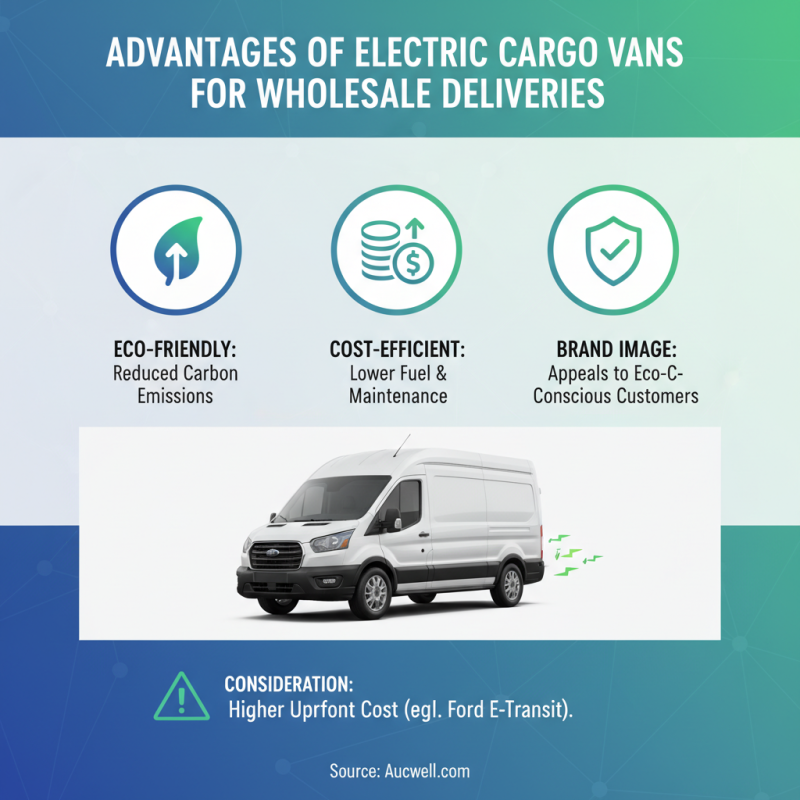
Electric cargo vans are changing the game for wholesale deliveries. They are eco-friendly and cost-efficient options for businesses. The shift to electric reduces carbon emissions significantly. This can improve a brand's image and appeal to eco-conscious customers. However, the upfront cost of electric vehicles, like the Ford All Electric Cargo Van, can be a hesitation for somE Businesses.
Transitioning to electric vans requires careful planning. Businesses should assess their delivery routes. Tools like route optimization software can help reduce mileage and energy use. Electric vehicles often have limited range. Understanding charging infrastructure in your area is essential to avoid disruptions.
Tips for maximizing efficiency with electric cargo vans include regular maintenance checks. Monitor battery health to ensure optimal performance. Keep your vans clean to improve aerodynamics. Additionally, training drivers on efficient driving habits can extend battery life. Assessing these factors can lead to better planning and productivity in wholesale deliveries.
The 2026 electric cargo van market is heating up. One significant player is the electric cargo van, designed for efficiency and utility. When comparing it with competitors, aspects like battery range, payload capacity, and technology features stand out. Many models offer similar payloads but differ in their electric range.
For instance, some competitors feature advanced driver-assistance systems. In contrast, others prioritize sturdiness over luxury. This leads to a serious question—what do businesses need more? Efficiency or comfort? Moreover, the lack of consistent charging infrastructure is a concern for many drivers. It forces them to reconsider their choices.
The Passenger Van Ford Transit Van shows a fresh approach but may lag in certain areas. While competitors boast about faster charging times, some electric vans offer a more spacious interior. However, this space may come at the cost of power and efficiency. Businesses must weigh these factors. Each option has its pros and cons. In some cases, reflections on usage will help make the best choice. Ultimately, the right van is one that fits specific needs, even if it comes with drawbacks.
Charging infrastructure is a crucial aspect when considering electric vans. Many areas still lack adequate charging stations. This can lead to significant challenges for businesses relying on electric vans for deliveries. The distance between charging points can be substantial in rural regions. Urban areas may have more options, but they can also be crowded and time-consuming. Business owners need to plan fleets carefully.
Range is another critical factor. Electric vans generally have a limited range compared to their gas counterparts. Many models offer between 100 to 200 miles on a single charge. This may not be sufficient for all businesses. Some companies may find themselves needing to recharge multiple times in a day. This can disrupt workflows and increase operational costs.
Furthermore, charging times can vary. Fast chargers can take about an hour, but standard home chargers can take much longer. If a fleet is out of service for charging, it impacts customer satisfaction. Businesses must reassess their routes and time management to accommodate these challenges. Navigating these limitations can be tricky, requiring innovative solutions and adaptability.
When considering the acquisition of electric cargo vans, understanding the cost dynamics is crucial. The decision between purchasing and leasing can significantly impact long-term expenses. A recent industry report highlights that leasing can reduce upfront costs by approximately 30-40%. This makes it attractive for businesses with limited capital. However, lease agreements might come with mileage limits, potentially leading to additional charges.
Purchasing an electric cargo van means full ownership, which is appealing. However, the initial investment is high. It can exceed $50,000 for some models. Depreciation can be tricky too. Data indicates that electric vehicles lose about 20% of their value within the first year. This can lead to unanticipated financial losses if the vehicle is not maintained properly.
Tip: Assess your business's mileage needs carefully. If you exceed lease limits often, it may lead to hefty fees. Always calculate total costs beyond the sticker price. Sometimes, owning a vehicle may yield better long-term savings than leasing. Also, consider maintenance costs that can vary between leasing and ownership scenarios. Take time to evaluate your options thoroughly.
The rise of electric cargo vans presents unique challenges for fleet management. Many companies overlook the importance of proper charging infrastructure. A recent survey indicated that 30% of fleet managers stated inadequate charging options hindered their deployment of electric vans. This is a significant barrier to entry for businesses considering Electric Van Cargo solutions.
Routine maintenance planning is also essential. Electric vehicles typically have lower maintenance needs compared to traditional vans. However, when issues arise, they can be complex and require specialized knowledge. Studies show that 20% of fleet operators are unprepared for these situations. Additionally, data from the U.S. Department of Transportation shows that few fleets have trained mechanics for electric vehicle issues.
Training drivers on energy-efficient practices is vital too. Studies reveal that proper training can boost the efficiency of electric cargo vans by up to 15%. Yet, many fleets fail to implement effective training programs. Monitoring driver behavior is equally critical. Continuous tracking of energy consumption can lead to better performance. This proactive approach can reduce the total cost of operation significantly.
| Service Type | Efficiency (Miles per Charge) | Cargo Capacity (Cubic Feet) | Charging Time (Hours) | Operating Cost per Mile ($) |
|---|---|---|---|---|
| Routine Maintenance | 150 | 200 | 6 | 0.15 |
| Fleet Management | 180 | 220 | 5 | 0.12 |
| Repairs & Parts | 160 | 210 | 7 | 0.18 |
| Battery Services | 120 | 230 | 8 | 0.20 |
| Tracking Services | 140 | 200 | 6.5 | 0.14 |
The electric cargo van market is evolving rapidly. Businesses are recognizing the efficiency of All Electric Cargo Vans. Many companies now seek sustainable solutions for their delivery needs. These vehicles can reduce fuel costs significantly. Their lower emissions are also a major selling point. However, the infrastructure for charging remains a concern. More charging stations are needed to support widespread use.
As the demand grows, manufacturers are innovating with improved battery technologies. Future models may offer longer ranges and quicker charging capabilities. Fleets could operate without the fear of running out of power mid-delivery. But some challenges persist. The upfront cost of electric vehicles can still be daunting for small businesses. It requires careful budgeting and planning for many.
Market trends indicate a shift toward customization in electric vans. Businesses want vehicles tailored to their specific needs. Features like modular shelving and temperature control could be offered. There’s also a focus on integrating technology for tracking and management. Companies must keep an eye on these trends to stay competitive. Future-proofing will involve investing in all electric cargo vans. Making greener choices today could pave the way for smarter fleets tomorrow.
The electric pickup truck market is experiencing a remarkable surge, driven by growing consumer demand for practicality, versatility, and eco-friendliness. As more individuals seek out vehicles that can comfortably accommodate both passengers and cargo, the design and functionality of electric pickups are evolving to meet these needs. With spacious rear compartments and the ability to carry a significant amount of weight, these vehicles are becoming increasingly attractive to a wide range of users, from families to businesses.
One standout option in this growing segment features a roomy compartment that can comfortably seat 2-4 passengers while also providing ample cargo space. The thoughtful design ensures that it can hold a variety of goods without compromising on comfort. Furthermore, this electric pickup offers battery options, including lead-acid and lithium iron phosphate, catering to different user preferences. The charging time is efficient, taking only 6-8 hours, making it a convenient choice for daily use. Additionally, the advanced braking system enhances safety on the road, improving peace of mind for drivers and passengers alike as they navigate their daily activities.
: Electric cargo vans are eco-friendly and cost-efficient. They significantly reduce carbon emissions, enhancing brand image.
Businesses need to assess delivery routes and charging infrastructure. Using route optimization tools can also reduce energy use.
Regular maintenance checks are essential. Monitoring battery health and training drivers on efficient habits can help improve performance.
Electric vans generally have a limited range. Many models offer 100 to 200 miles per charge, which may disrupt workflows.
The lack of charging stations can challenge deliveries. Rural areas may have fewer options, while urban areas can be crowded.
Consider battery range, payload capacity, and technology features. Efficiency vs. comfort is a crucial aspect to reflect on.
Charging times vary significantly. Fast chargers take about an hour, while home chargers may take much longer, affecting service.
Higher upfront costs and limited range are concerns. Some businesses may experience workflow disruptions due to charging needs.
They should reassess routes and time management strategies. Innovative solutions can help navigate the challenges posed by electric vehicles.
Underestimating charging needs is a frequent error. Businesses must ensure sufficient infrastructure and planning for delivery routes.
The 2026 Ford Electric Cargo Van represents a significant advancement in the electric vehicle market, offering features and specifications tailored for wholesale deliveries. With advantages such as lower operating costs, reduced emissions, and spacious cargo capacity, this model stands out among competitors. A detailed comparison emphasizes its superior performance and technology, positioning it favorably in the electric van landscape.
Moreover, the article discusses critical aspects such as charging infrastructure and range considerations, vital for businesses looking to adopt electric vans. It also explores the financial implications of purchasing versus leasing, providing insights for fleet managers. By adhering to best practices in fleet management, businesses can maximize the benefits of the Ford Electric Cargo Van. Lastly, emerging trends in the electric cargo van sector indicate a promising future for wholesale businesses looking to innovate and enhance their delivery capabilities.